Adrenergic Receptors
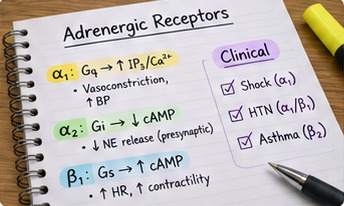
Adrenergic receptors are G protein–coupled receptors that mediate the effects of catecholamines (epinephrine and norepinephrine) in the sympathetic nervous system. In this lesson, you'll review the receptor subtypes, their signaling pathways, and key clinical applications.

0:00 / 20:34
By the end of this section, you should be able to:
- Identify the main adrenergic receptor subtypes (α₁, α₂, β₁, β₂, β₃) and their primary signaling pathways.
- Describe key physiologic effects of receptor activation in major organ systems.
- Apply this knowledge to common clinical scenarios, such as shock, hypertension, and asthma.

Next, we'll explore the pharmacologic agents that target these receptors and how they're used in clinical practice.