Malnutrition and eating disorders
Protein-energy malnutrition splits into two patterns by what is missing; eating disorders are read from their electrolytes. Edema in kwashiorkor and hypokalemic alkalosis in bulimia are predictable from first principles.
Kwashiorkor versus marasmus
L6 p.28–31Both are protein-energy malnutrition (PEM) in children, but they differ in what the diet lacks. Kwashiorkor is a protein deficiency with roughly adequate calories (mostly carbohydrate). Marasmus is a deficiency of total calories, protein and carbohydrate together.
Two faces of PEM
Kwashiorkor (protein lacking)
- Calories near normal, protein low
- Visceral protein falls; somatic (muscle) protein relatively spared
- Hypoalbuminemia → pitting edema and ascites (low oncotic pressure)
- Fatty liver (↓ apolipoprotein synthesis, so fat cannot be exported), hepatomegaly
- Flaky-paint skin, flag-sign hair, often subcutaneous fat retained, child may look deceptively plump
Marasmus (all calories lacking)
- Total energy deficiency
- Somatic (muscle) protein broken down for gluconeogenesis
- Extreme muscle wasting, broomstick limbs, loss of subcutaneous fat
- No edema; visceral protein and albumin relatively preserved
- Growth retardation, anemia; prognosis better than kwashiorkor
Lecture image
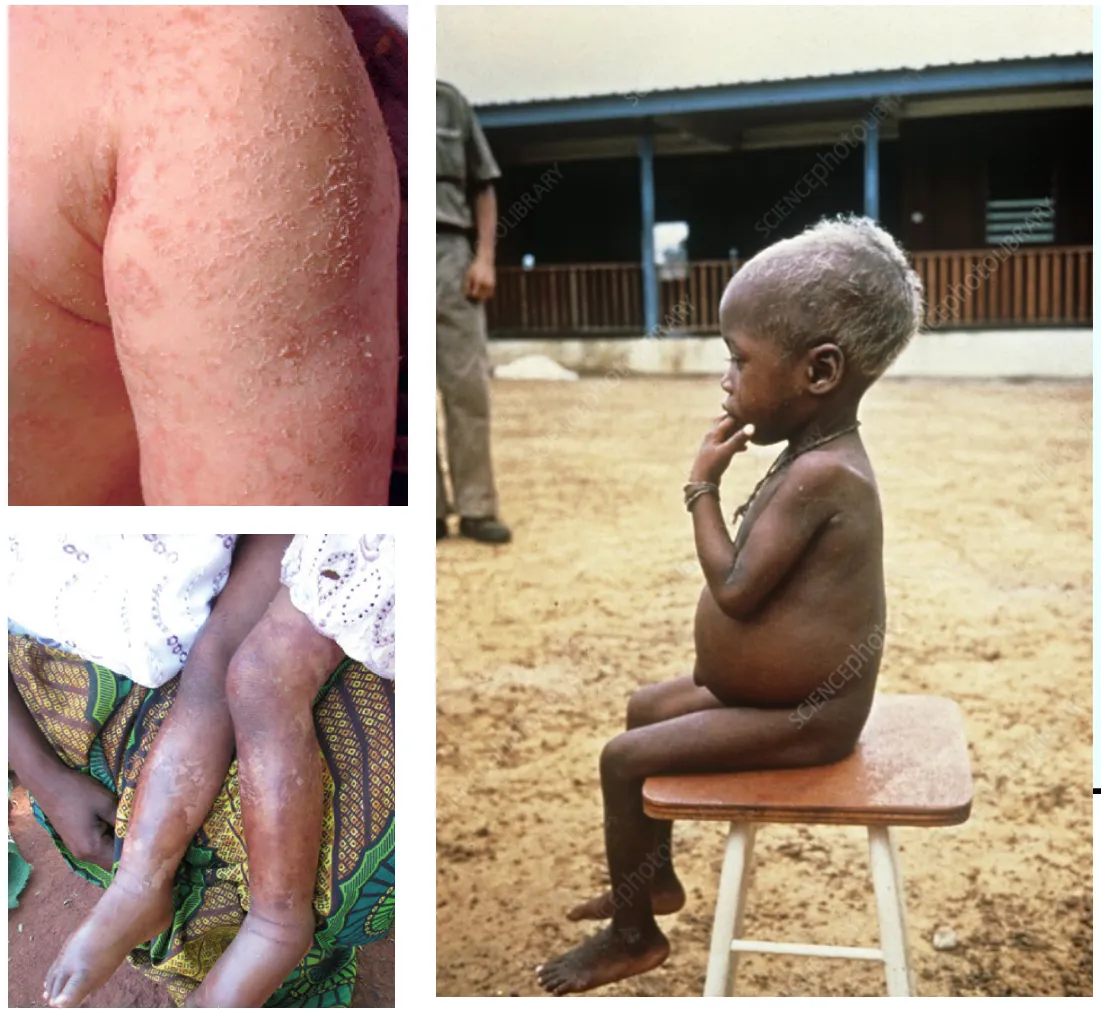
Anorexia nervosa
L6 p.32Anorexia nervosa is self-induced starvation with an intense fear of weight gain despite being underweight. The body responds to starvation by shutting down non-essential systems, and the findings follow that logic.
Starvation responsesL6 p.32
| Finding | Mechanism |
|---|---|
| Secondary amenorrhea | Low body fat → ↓ GnRH → low FSH/LH → low estradiol |
| Osteoporosis | Low estrogen (estrogen normally stimulates osteoblasts and restrains osteoclasts) |
| Low T₃ (sick euthyroid) | Peripheral conversion of T₄ to T₃ falls → bradycardia, hypotension, cold intolerance |
| Lanugo hair, brittle nails, sparse scalp hair | Response to starvation and low metabolic rate |
| Ventricular arrhythmia (most common cause of death) | Often hypokalemia from purging/laxatives, plus cardiac atrophy |
Secondary amenorrhea
- Mechanism
- Low body fat → ↓ GnRH → low FSH/LH → low estradiol
Osteoporosis
- Mechanism
- Low estrogen (estrogen normally stimulates osteoblasts and restrains osteoclasts)
Low T₃ (sick euthyroid)
- Mechanism
- Peripheral conversion of T₄ to T₃ falls → bradycardia, hypotension, cold intolerance
Lanugo hair, brittle nails, sparse scalp hair
- Mechanism
- Response to starvation and low metabolic rate
Ventricular arrhythmia (most common cause of death)
- Mechanism
- Often hypokalemia from purging/laxatives, plus cardiac atrophy
Bulimia nervosa
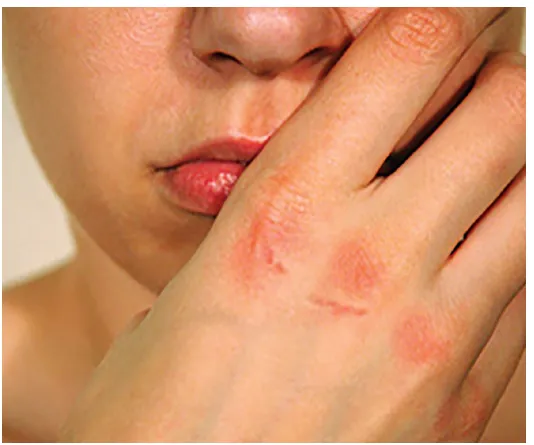
L6 p.34Bulimia nervosa is binge eating followed by compensatory purging, usually in patients of near-normal weight. The classic findings come from the route of the vomiting.
Lecture image
- Hypokalemic metabolic alkalosis: vomiting loses gastric H⁺ and Cl⁻, and volume loss drives renal K⁺ loss.
- Parotid (salivary) gland swelling from repeated stimulation.
- Eroded dental enamel from gastric acid, and Russell sign (knuckle calluses).
- Hematemesis from a Mallory–Weiss tear at the gastroesophageal junction.
- Laxative abuse instead gives diarrhea with a normal anion-gap (hyperchloremic) metabolic acidosis, plus hyponatremia, hypokalemia and hypomagnesemia.
Obesity and metabolic syndrome
L6 p.35–36Obesity is a BMI above 30 kg/m² and an independent risk factor for ischemic heart disease. Appetite is set by a balance of hormones: leptin from adipose tissue signals fullness and raises energy expenditure, while ghrelin from the stomach stimulates appetite. When leptin is deficient or its signaling fails, ghrelin acts unopposed: appetite rises and energy expenditure falls.
Leptin
- From adipose tissue
- Signals satiety
- ↑ energy expenditure
- Resistance/deficiency → obesity
Ghrelin
- From the stomach
- Signals hunger
- Rises before meals
- Unopposed when leptin fails
Metabolic syndrome is the cluster of central obesity, hypertension, dyslipidemia and insulin resistance (type 2 diabetes). In type 2 diabetes, insulin is high because receptors are fewer and post-receptor signaling is defective; hyperinsulinemia drives triglyceride storage in adipose tissue. Obesity's complications span many organs: ischemic heart disease, stroke, fatty liver, gallstones, osteoarthritis, obstructive sleep apnea, and several cancers.
Knowledge check · 6.4
Answer, read why, and try again whenever you like. Answers are kept in both study modes.
- Q1Anorexia nervosa: sick euthyroidCh. VI cases p.1L6 p.32
A 22-year-old woman has lost 20 kg over two years. Her husband hears her vomiting in the bathroom. Her last period was six months ago. She is emaciated with bilateral retromandibular (parotid) swelling, hypokalemia and hemoglobin 8 g/dL.
Which additional laboratory finding is most likely?
- Q2Kwashiorkor edema (oncotic pressure)L6 p.28–30
A 2-year-old in a famine region eats mostly cassava porridge. He has a swollen abdomen, pitting edema of the legs, pale hair with light and dark bands, and desquamating skin, but retains some subcutaneous fat.
Which best explains the edema?
- Q3Bulimia: hypokalemic metabolic alkalosisL6 p.34
A 19-year-old woman of normal weight has calluses on her knuckles and painless swelling of both parotid glands. She reports binge eating.
Which acid–base and electrolyte picture fits self-induced vomiting?
- Q4Leptin and ghrelinL6 p.35
In obesity, which hormonal change most directly increases appetite?